
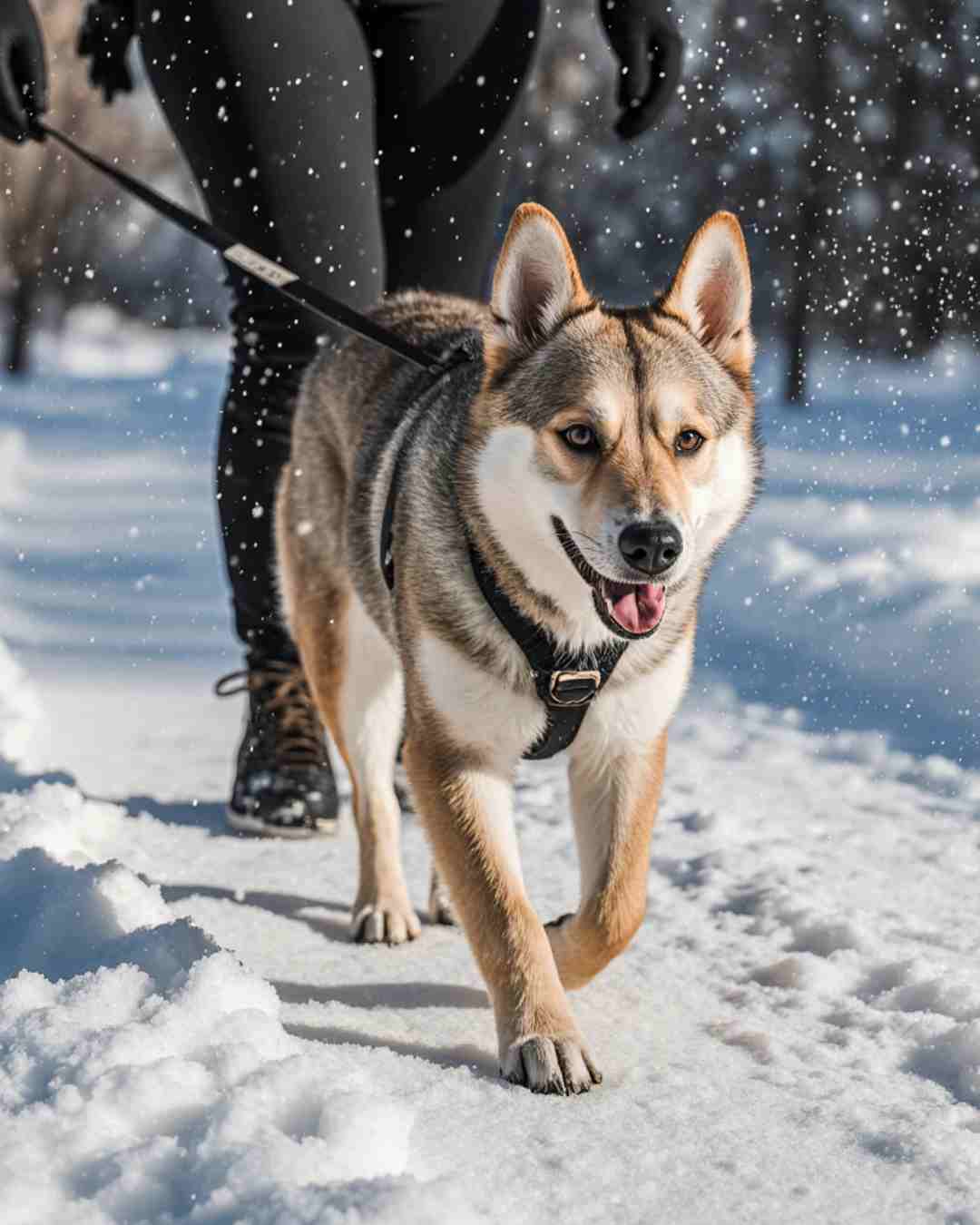
how to train your dog for confident walks on snow and ice
How to train your dog for confident walks on snow and ice — that’s probably what you’re trying to figure out right now, right? Winter walks look magical until your dog stops, stares at the icy sidewalk, and decides they’re not moving another inch. I’ve dealt with that exact moment. One year my dog froze mid-walk like the snow personally offended him. If you want safe, steady, confident winter walks, you’re in the right place.
Why Winter Walking Confidence Matters
Winter walks challenge even the bravest dogs. Snow hides smells, ice changes footing, and cold winds make everything feel more intense. But here’s the truth I learned the hard way: your dog relies on your confidence before they build their own. Ever noticed how your dog hesitates when you hesitate? Yeah, same here.
So how do you help your dog feel secure? By breaking the process into easy, fun steps your pup actually enjoys. Sounds good, right?
Build Trust with the Right Gear
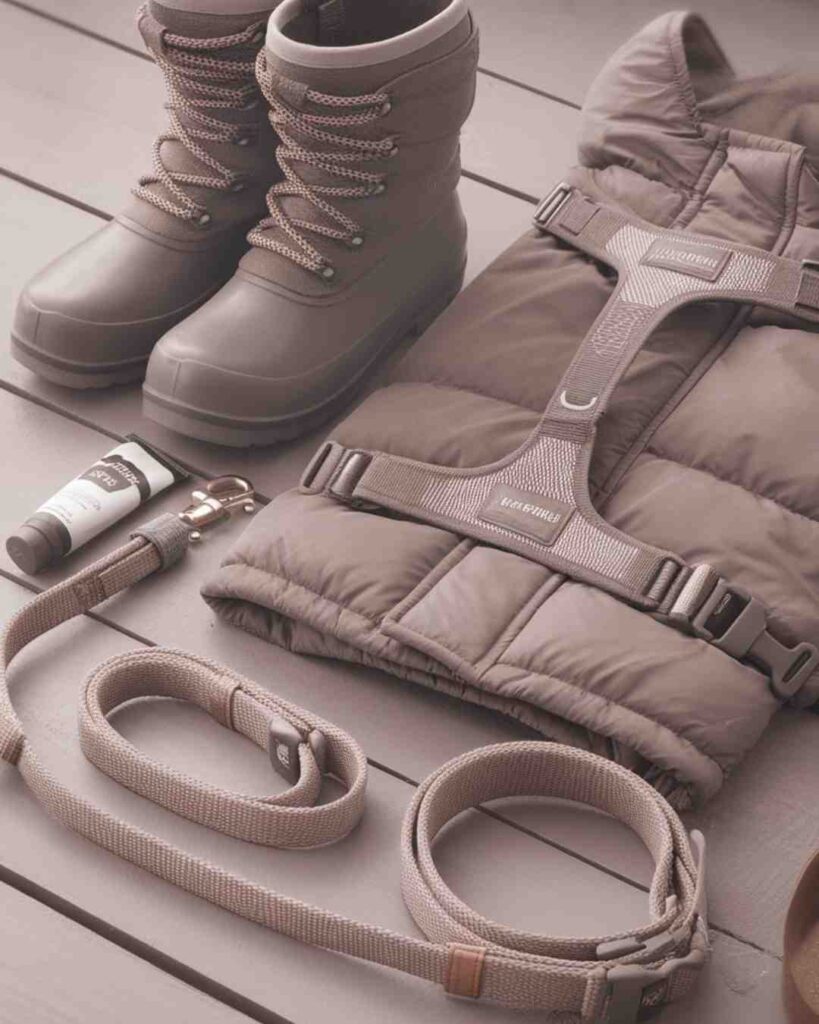
Your dog handles winter better when their body feels warm, protected, and stable. Think of gear as the foundation of confidence.
Choose Boots with Real Traction
I used to think dog boots were “extra,” but the first time I saw my dog walk on ice without slipping, I felt like a genius.
Look for:
- Rubber soles with textured grip
- Snug Velcro straps
- Water-resistant material
- Soft lining for comfort
These boots reduce slipping and make every step feel predictable. Ever wondered why some dogs refuse boots? Because they feel loose or awkward. A secure fit solves that.
Pick a Harness That Controls Sliding
A winter walk needs stability. The best harnesses offer:
- Front-clip control for pulling
- Chest padding for comfort
- Adjustable straps to prevent shifting
- Strong buckles for reliability in cold weather
I reach for the front-clip option every winter because it helps me guide my dog away from icy patches without yanking.
Need a tidy space for storing your winter walk essentials? Try these Dog Room Storage Ideas.
Don’t Forget the Paw Balm
Winter cracks paws fast. Paw balm gives your dog:
- Moisture protection against cold
- A barrier from salt
- Better grip on packed snow
I apply it before and after every walk. It takes ten seconds and saves your dog from discomfort.
Help Your Dog Get Used to Snow at Home
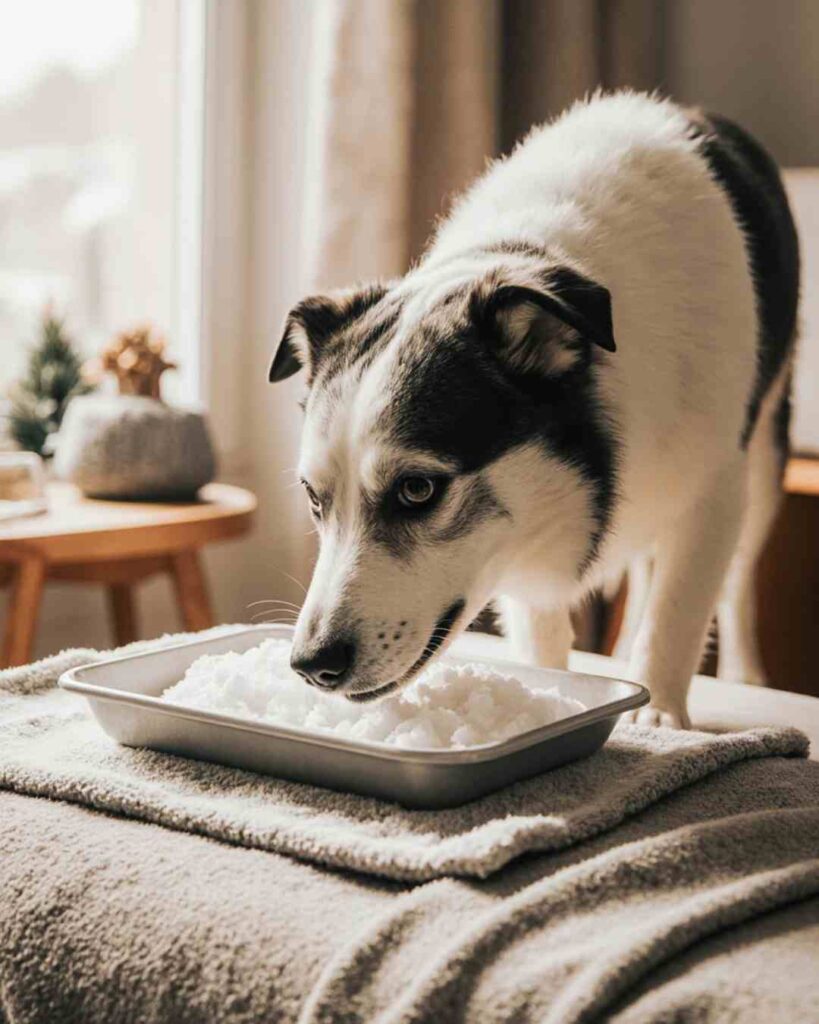
Before you expect confidence outside, you have to teach your dog what snow even is.
Start with a “Snow Mat” Indoors
When my dog first saw snow on the balcony, he poked it once and ran away like it attacked him. So I brought a small tray of snow inside.
Try this:
- Place a towel on the floor
- Add a thin layer of snow
- Let your dog sniff, tap, and explore
Reward every brave moment. Your dog learns, “Okay… snow isn’t scary.”
If you need cozy indoor setups for training, you’ll love Dog Room Ideas for Small Spaces.
Add Gentle Movement Challenges
Confidence comes from control, so teach your dog how their paws feel on different textures:
- A slightly icy tile
- A wet mat
- A shallow plastic tray with slush
Why do this? Because your dog discovers how to manage footing in a safe place, not in the middle of the street.A simple non-slip training mat makes these early exercises so much easier and safer.
Teach Slow, Controlled Winter Walking Skills
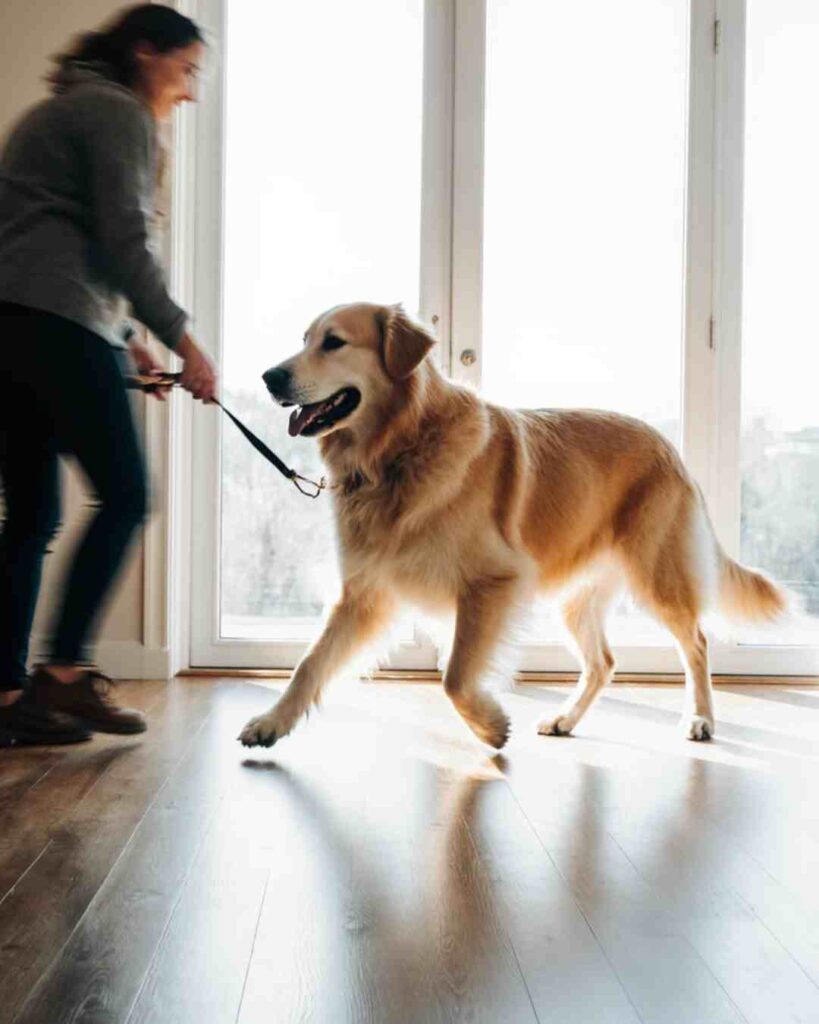
Your dog doesn’t magically understand how to walk on ice. You teach it—one small win at a time.
Start with “Slow Walks” Indoors
“Slow” feels boring, but trust me—winter walks demand it.
Steps:
- Clip the leash on inside.
- Walk slowly around your home.
- Reward your dog for matching your pace.
This teaches your dog the difference between “walk fast” and “walk carefully.”Using a lightweight long training leash helps your dog move naturally without slipping.
Practice “Wait & Step”
This simple exercise transformed my dog’s winter confidence.
How to teach it:
- Say “Wait”
- Pause
- Step forward
- Release with “Okay!”
Why it works: When your dog learns to pause before moving, they also learn to avoid charging over ice patches.
H3: Add Small Obstacles for Balance
Use:
- Couch cushions
- Low boxes
- Rolled blankets
Your dog learns how to shift their weight and stay balanced. Ever seen a dog suddenly “figure out” how their body works? It’s adorable—and incredibly useful in winter.For balance work, the FitPaws Balance Disc is a game-changer.
Introduce Real Snow Gradually
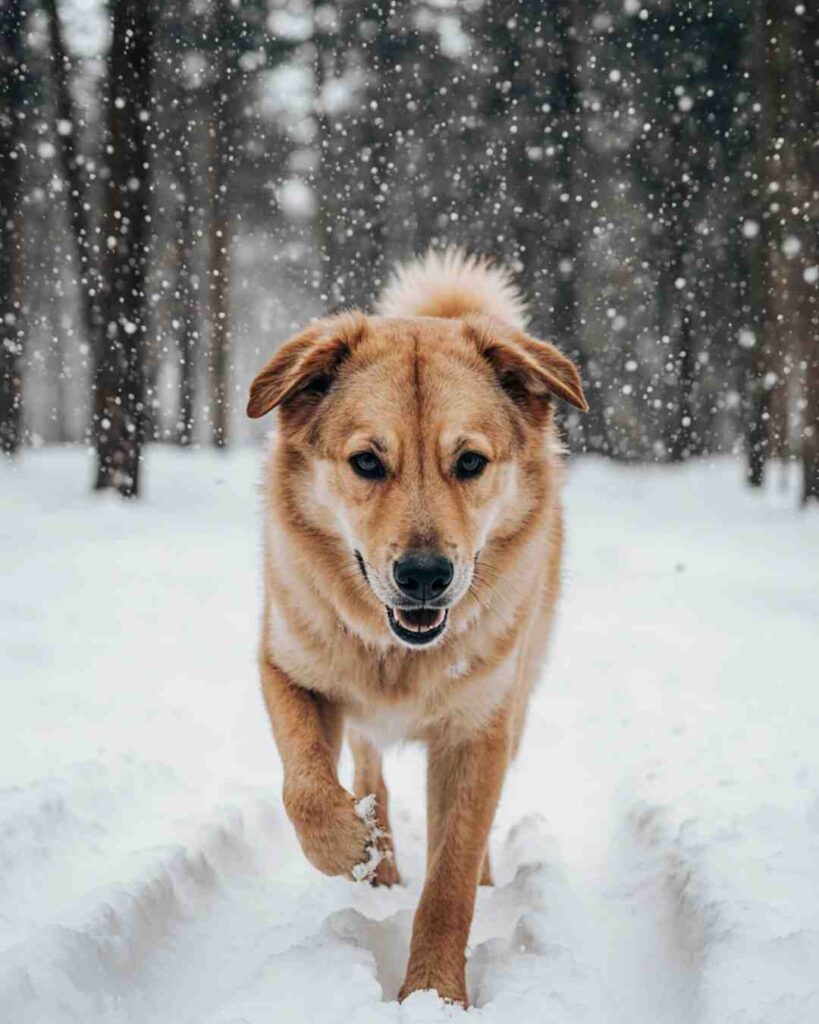
When your dog handles indoor challenges like a champ, it’s time to upgrade to real snow—but slowly.
Start with Short Snow Sessions
Go outside for 3–5 minutes. Reward:
- Every step forward
- Every brave sniff
- Every calm pause
Short sessions keep winter positive, not overwhelming.High-value treats like the Zuke’s Mini Naturals make outdoor winter training so much easier.
Avoid Ice in the Beginning
Let your dog walk on:
- Soft snow
- Powdery paths
- Lightly packed sidewalks
This builds confidence before introducing slippery spots.
Use High-Value Rewards
When the weather is cold, your dog needs motivation. I carry:
- Warm soft treats
- Tiny chicken pieces
- Freeze-dried beef
Your dog thinks, “Snow = delicious.” Motivation wins every time.
Teach Your Dog How to Handle Icy Spots
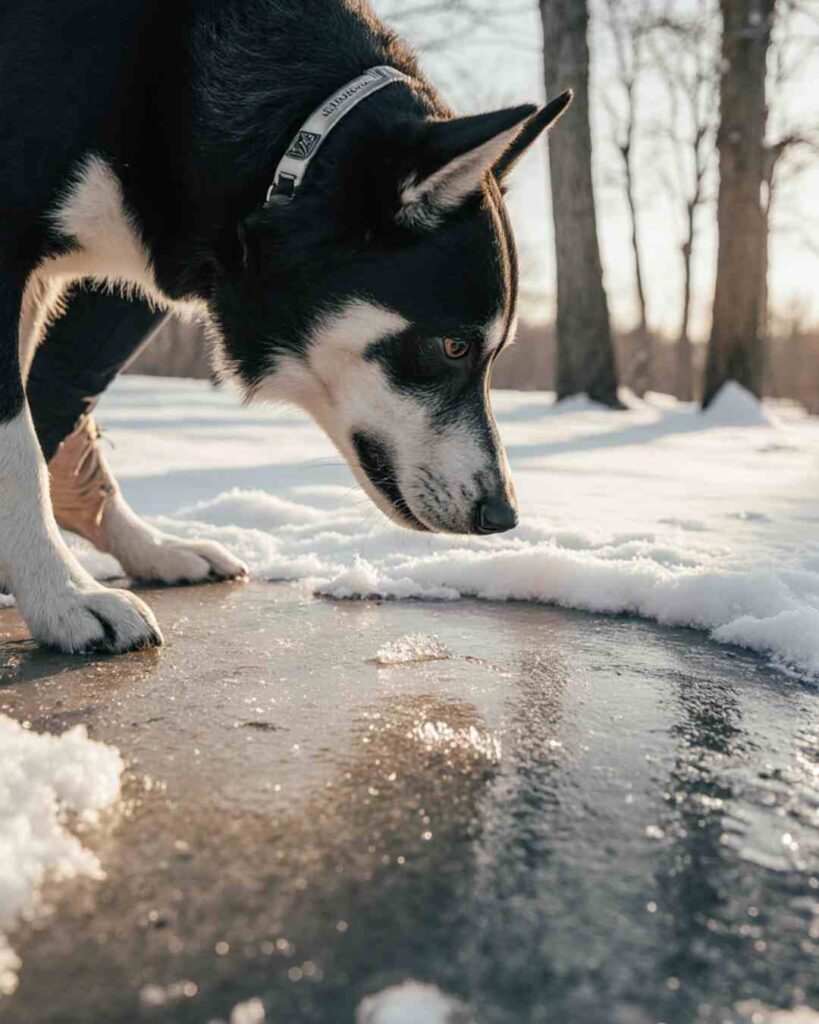
At this point, your dog trusts snow. Now you teach them to react calmly to ice.
First Step — Let Your Dog Observe
Walk near the ice but stay on safe ground. Let your dog:
- Look
- Sniff
- Choose to move forward
Why? Confidence grows when the dog makes the decision.
Second Step — Controlled Touch
Encourage one paw on the ice. Reward. One step at a time.
Never drag your dog onto it. That destroys trust instantly.
Third Step — Teach a “Careful” Cue
This cue saved me more times than I can count.
Say “Careful” every time:
- The ground becomes slippery
- You slow down
- You guide your dog around danger
Your dog learns the cue means, “Move gently and follow me.”
Manage Pulling on Snow & Ice
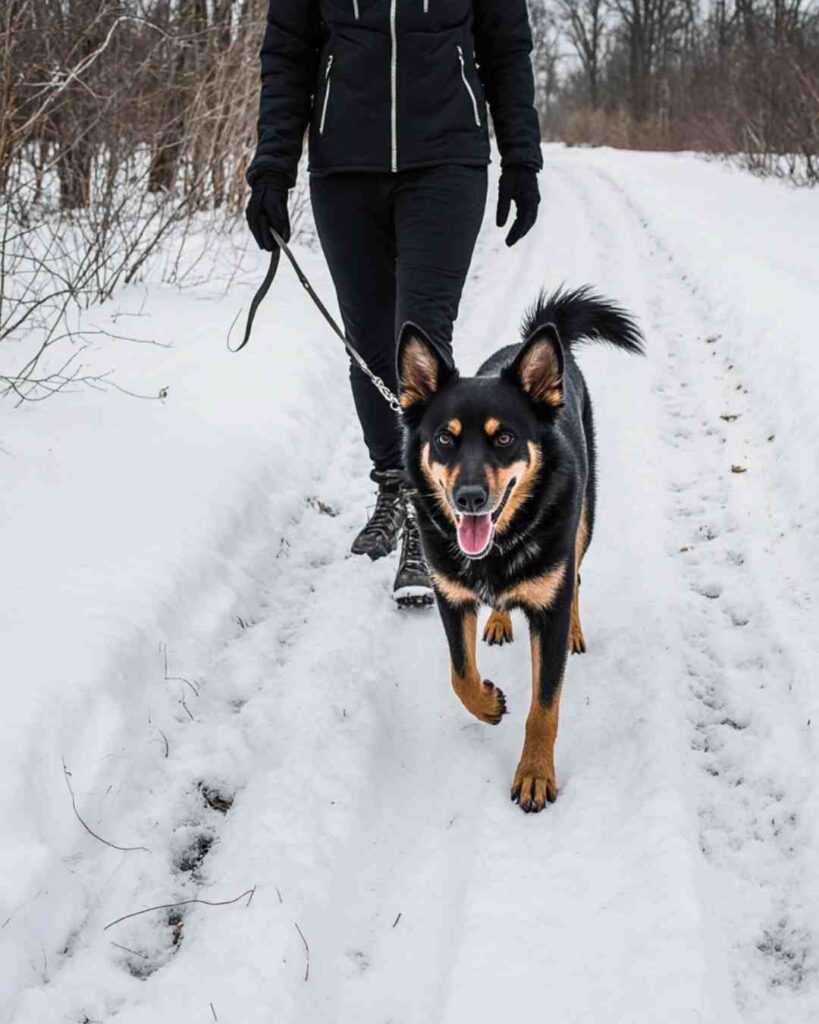
Pulling on normal ground isn’t great. Pulling on ice? Disaster.
Here’s how I fixed this with my dog.
Reward Position
Mark and reward whenever your dog walks:
- Beside you
- Slightly behind you
- With loose leash
This gives your dog a clear “target position.”
Turn Frequently
Frequent turns force your dog to focus on you instead of tunneling forward.
I do:
- Right turns
- Left turns
- Slow circles
Ever noticed how your dog forgets to pull when they’re locked into what you’re doing?
Change Speed on Purpose
Winter walking is about matching pace. Practice:
- Slow
- Medium
- Slow again
Reward when your dog adjusts without tension.
Build Your Dog’s Winter Confidence Every Day
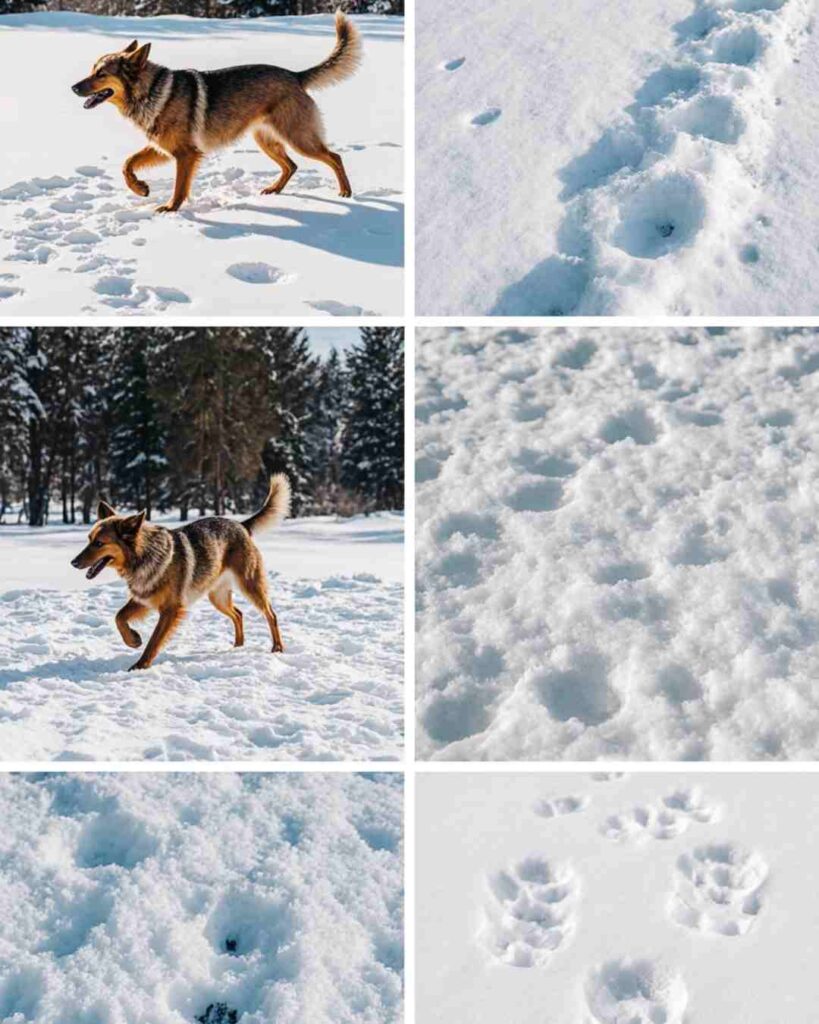
Your dog becomes confident through repetition. The more positive experiences they collect, the bolder they feel.
Try New Winter Surfaces
Let your dog explore:
- Soft snow
- Crunchy snow
- Packed paths
- Sidewalk edges
- Plowed parking lots
Each new texture builds body awareness.
Keep Sessions Fun and Light
Your energy matters. If you turn winter walks into a chore, your dog senses that vibe fast. Keep it playful. Use treats. Celebrate small wins.
And here’s my one slang moment for fun: winter training should feel chill, not a “whole mission.”
Recognize Fear and Respond Fast
Fear kills confidence. But you can reverse it quickly.
Signs your dog feels unsure:
- Tense body
- Tail tucked
- Ears pinned
- Hesitating around ice
- Clinging to you
When this happens:
- Pause the walk
- Reward calm behavior
- Move back to easier ground
Your dog learns, “You’ve got my back.”
Protect Your Dog from Cold Stress
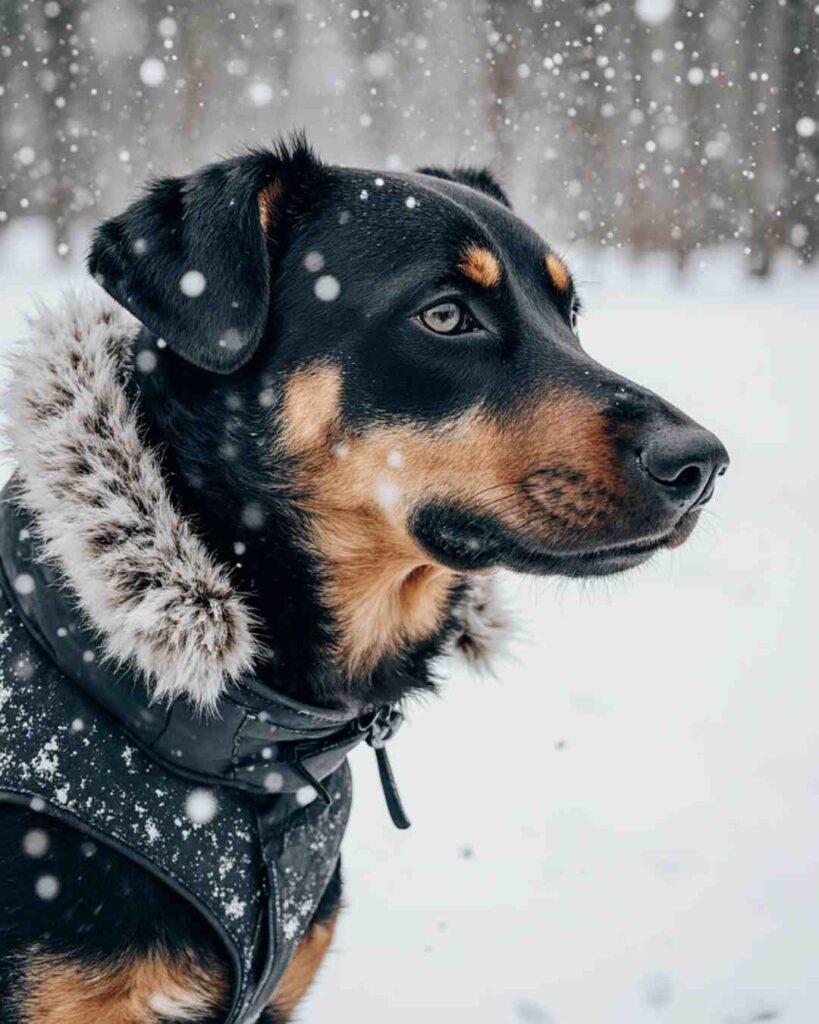
Confidence doesn’t happen if your dog feels cold or uncomfortable.
Watch for Winter Warning Signs
Look out for:
- Shivering
- Holding a paw up
- Refusing to walk
- Sudden slowness
If you see this, go home and warm up.
Add Winter Layers
Some dogs need:
- Fleece sweaters
- Waterproof jackets
- Wind-resistant coats
Don’t wait until your dog shivers. Keep warmth consistent.For lightweight warmth, the Gooby Fleece Vest is one of my winter staples.
Strengthen Your Dog’s Muscles for Better Stability
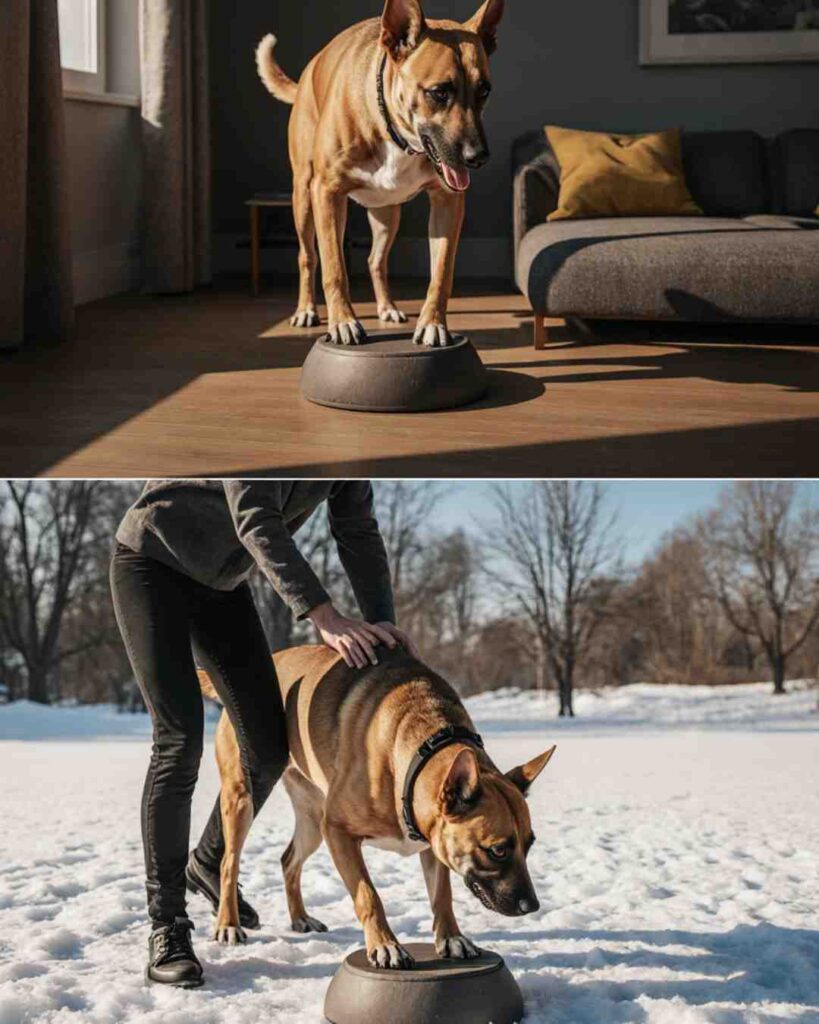
A strong dog handles winter surfaces better.
Do Indoor Strength Exercises
Try:
- Sit-to-stand reps
- Controlled steps on cushions
- Low jumps over broomsticks
- Gentle tug games
These exercises improved my dog’s balance more than anything else.
Increase Core Strength
A strong core keeps your dog from slipping.
Use:
- Balance discs
- Peanut balls
- Wobble boards
Start slow. Make it fun. Reward constantly.
If you want to build a cozy indoor space for training sessions, browse these Dog Room Ideas.
Help Your Dog Recover After Winter Walks
Recovery matters. Snow and ice strain muscles more than dry sidewalk.
Warm Paw Soak
Use warm water mixed with:
- Epsom salt (tiny amount)
- A soft towel
- Moisturizing paw balm afterward
This removes salt, relaxes muscles, and keeps paws healthy.
Gentle Stretching
Try:
- Shoulder stretches
- Back leg pulls
- Neck turns
Your dog stays flexible for the next walk.
Final Thoughts — Your Dog Can Master Winter Walks
Winter doesn’t need to feel stressful for you or your dog. Your pup becomes braver, steadier, and more confident when you guide them step by step. You give them the tools, the training, the gear, and the reassurance they need. And honestly? Watching your dog strut proudly through snow like a winter pro feels incredibly rewarding.
So grab the boots, warm treats, and harness… and go help your dog shine this winter. Who knows? You might start loving cold-weather walks just as much as your pup does.